
Email Us
sales@oritcranes.com

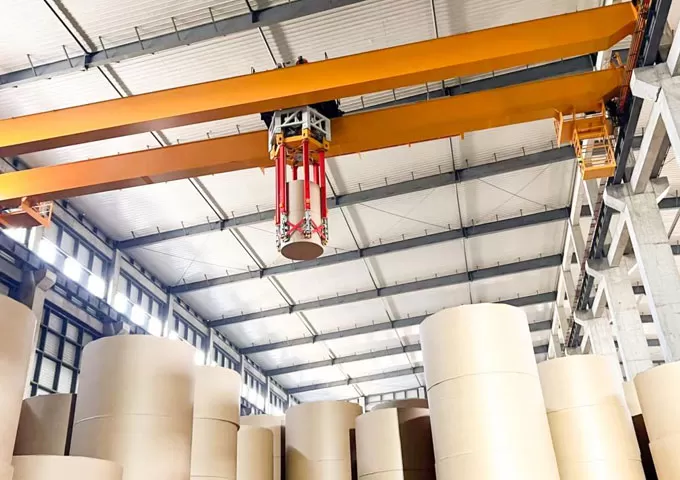
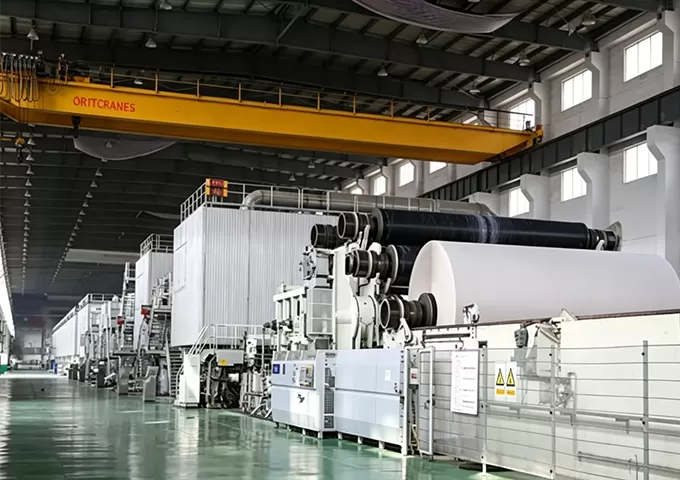
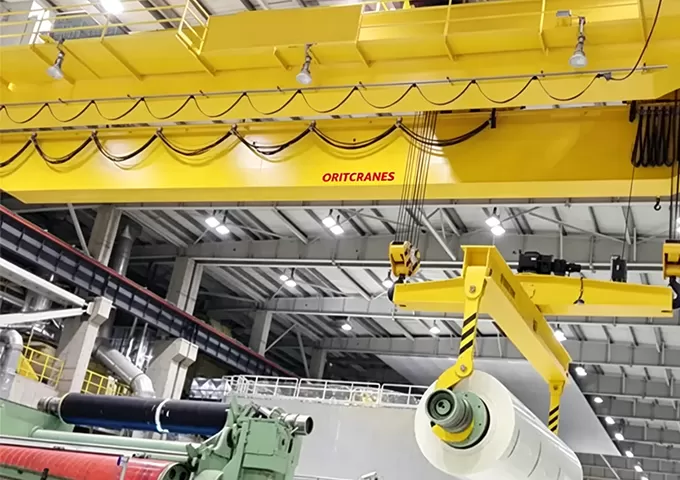
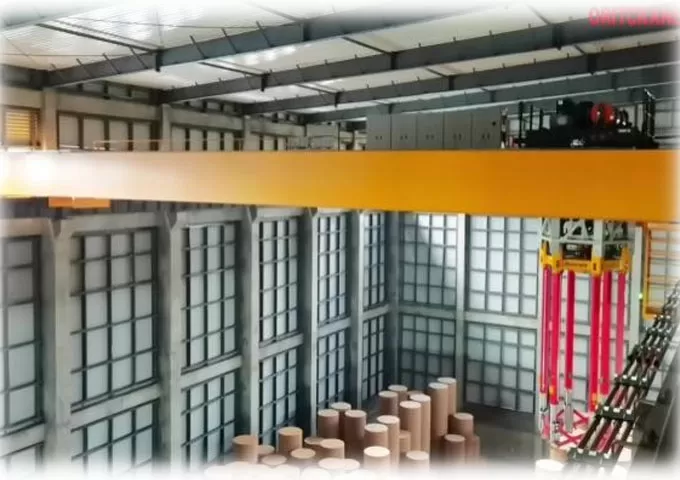
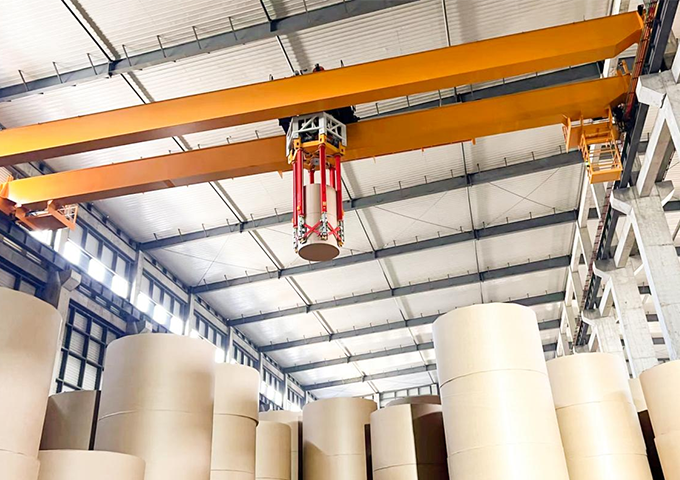
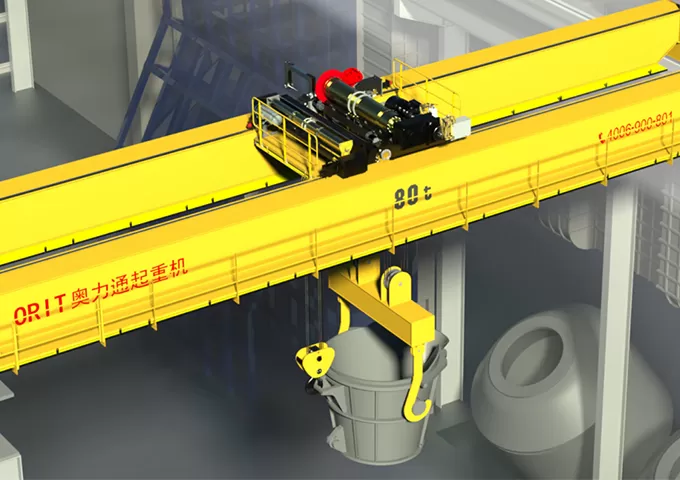
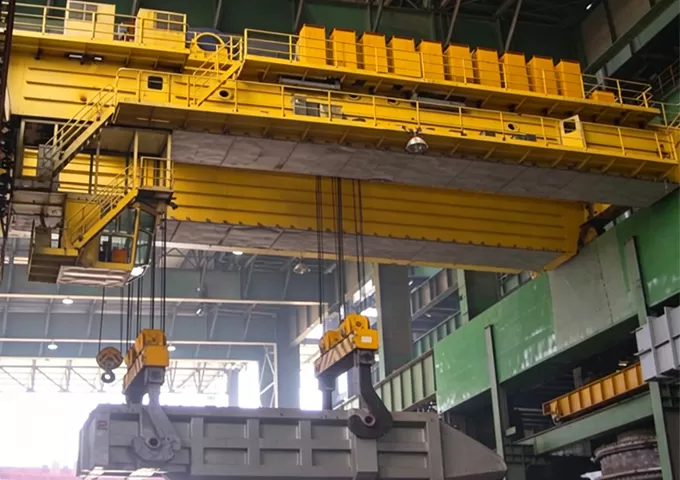
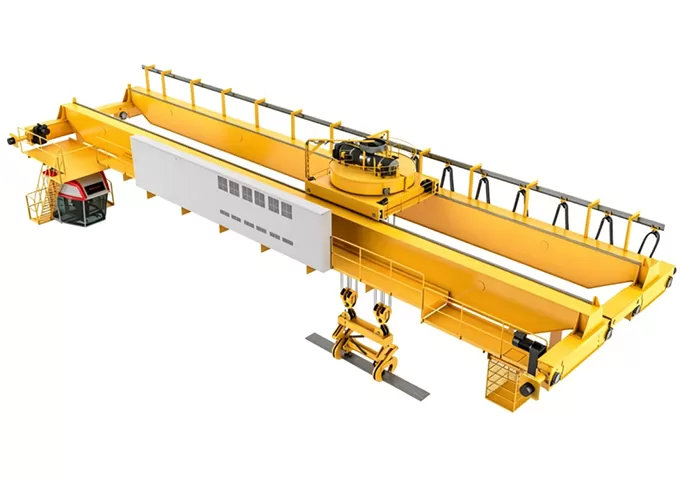
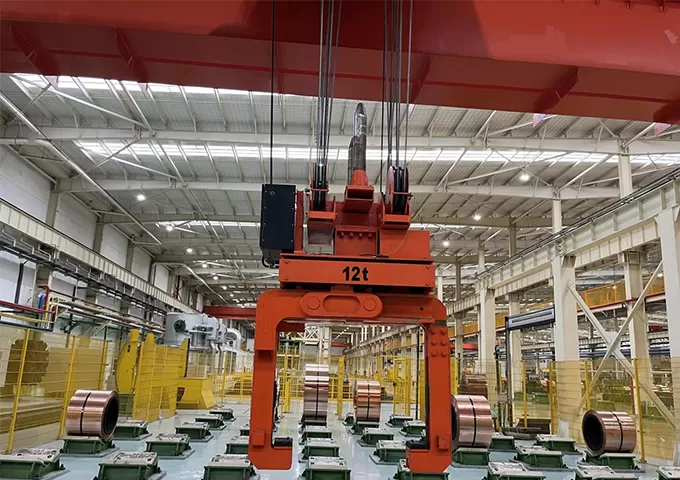
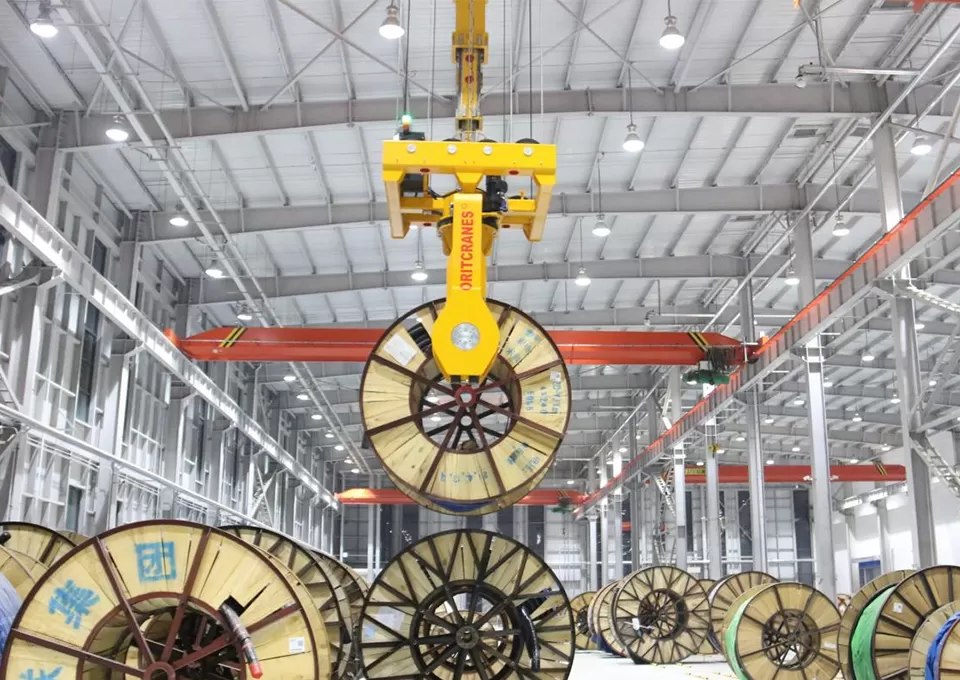
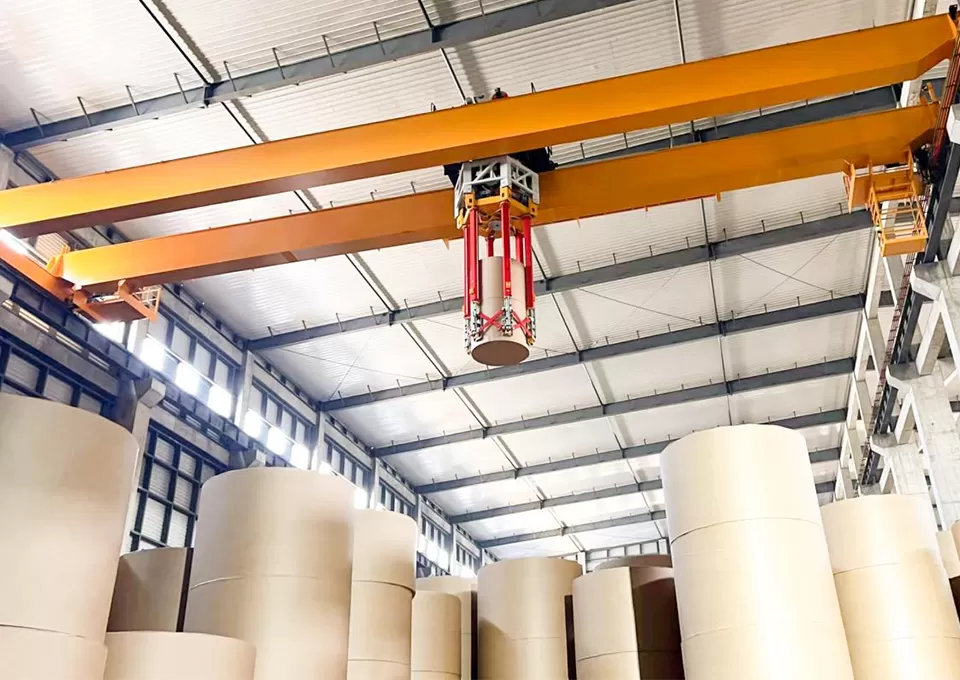
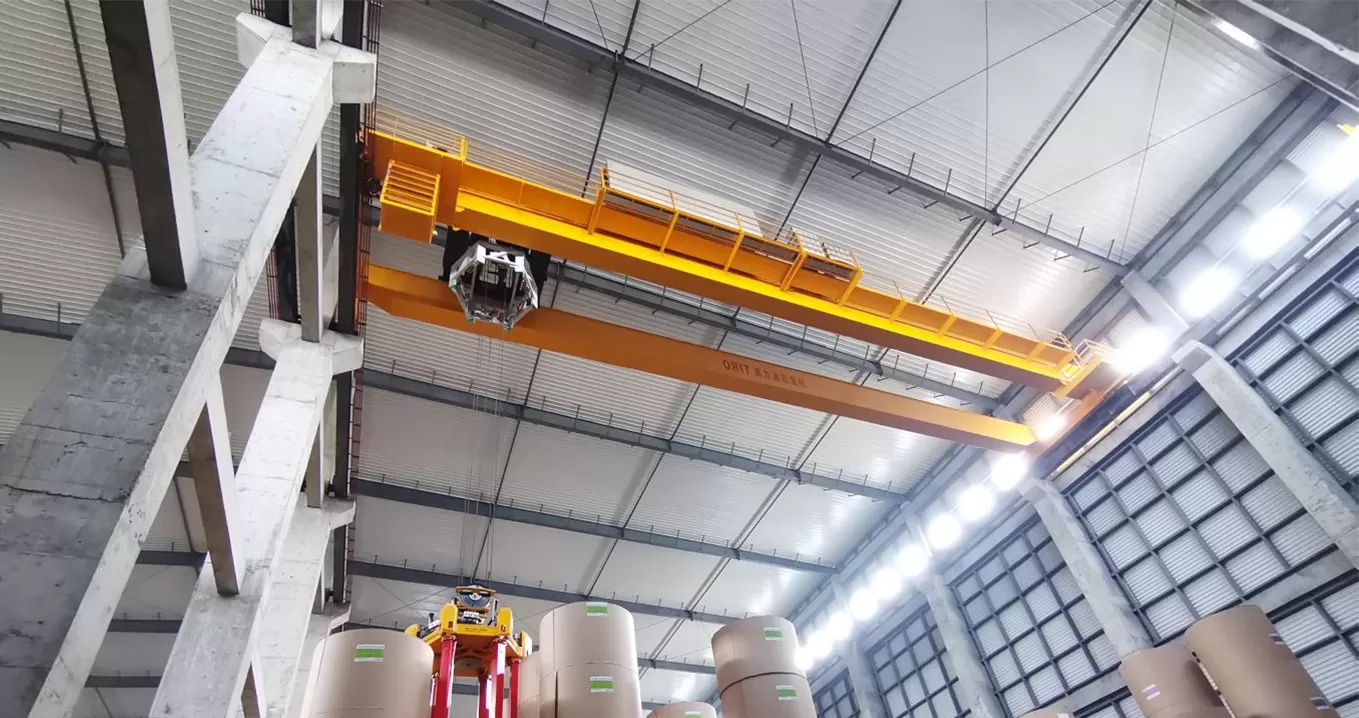
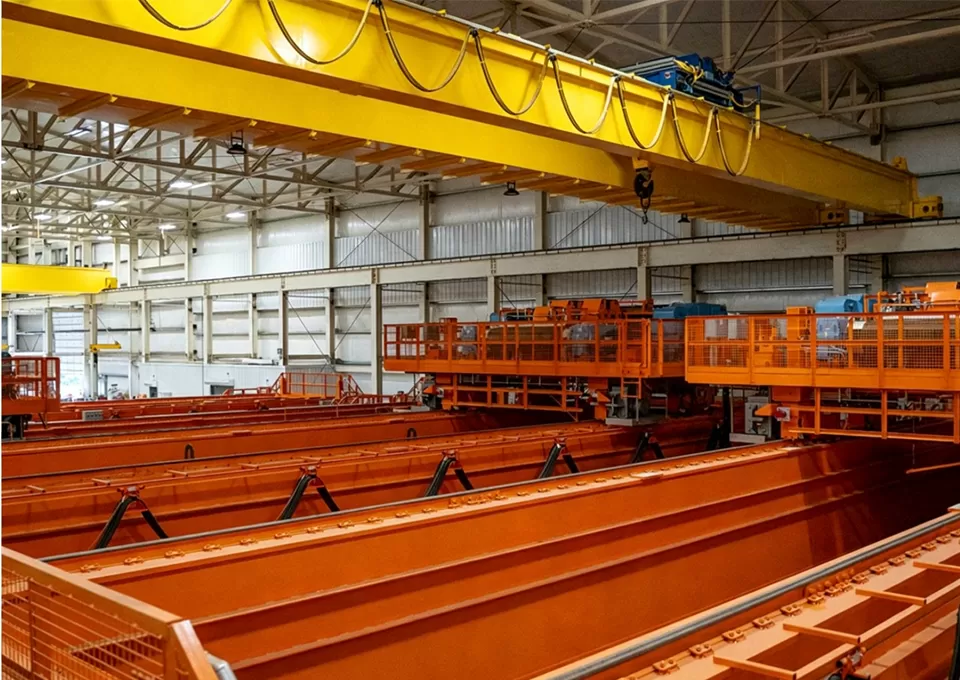
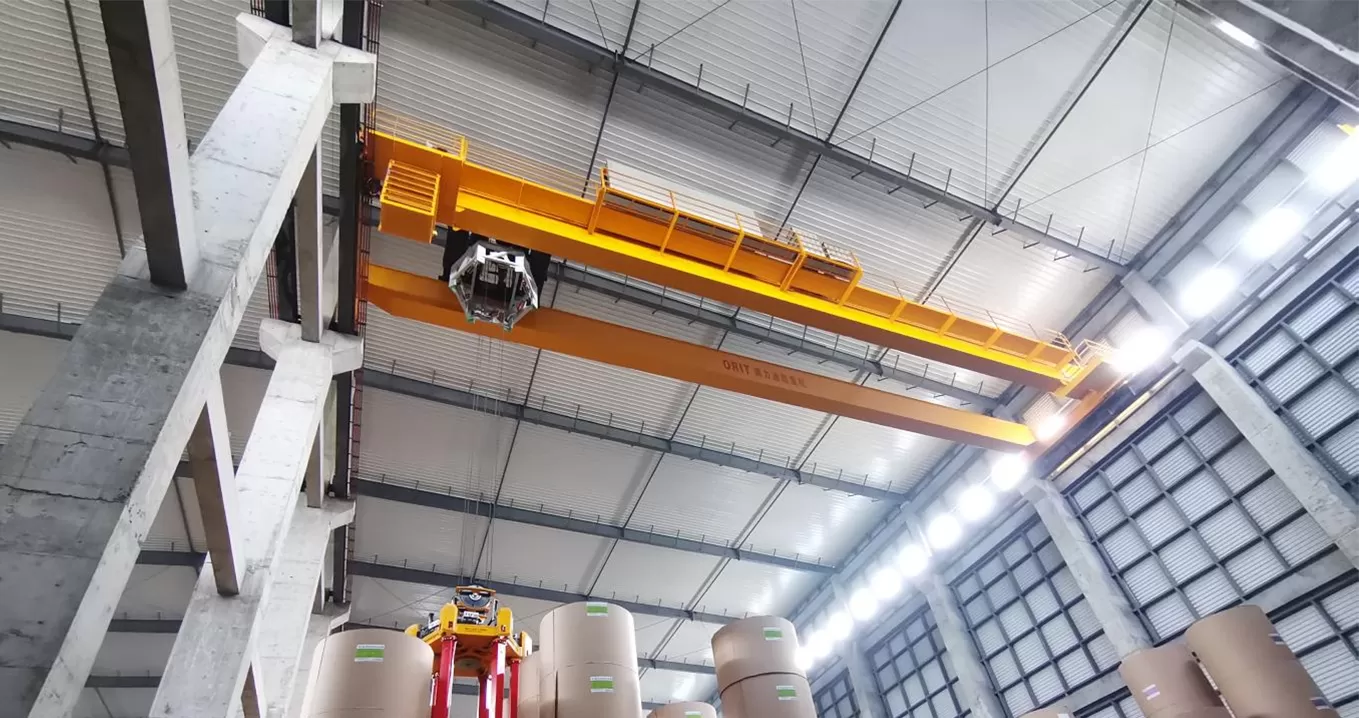
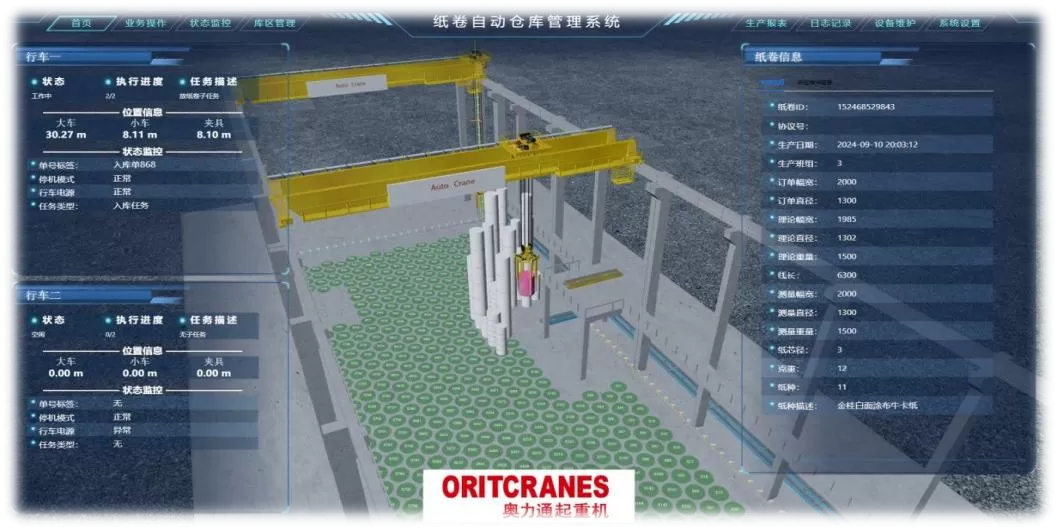
1. The intelligent warehousing system mainly consists of a Warehouse Management System (WMS), intelligent cranes, dedicated paper roll spreaders, a control system, a positioning system, a communication system, industrial PCs, and conveying equipment.
2. The crane body is composed of a dedicated trolley frame, drive system, control system, and communication system.
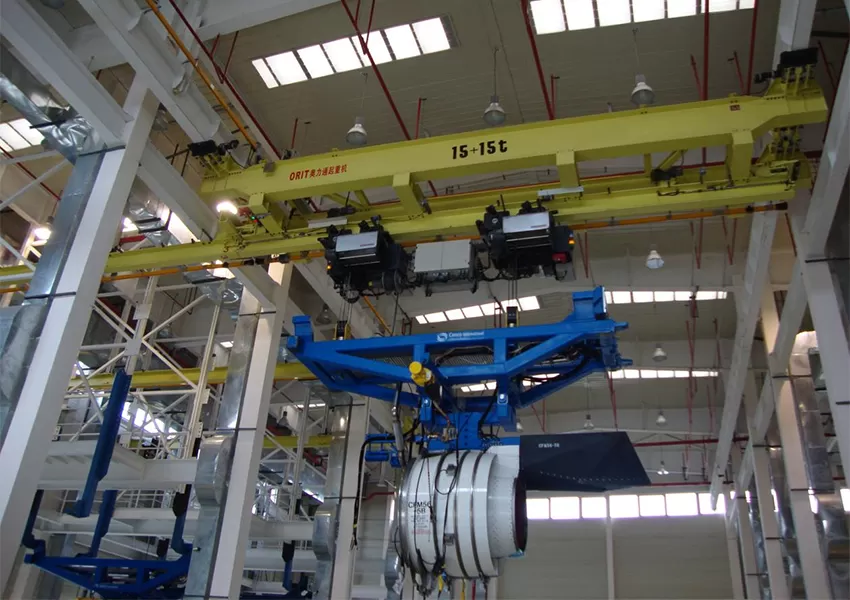
3. The dedicated paper roll spreader enables precise handling and storage of paper rolls, improving warehouse management efficiency and operational accuracy. Additionally, the dedicated paper roll spreader adopts an anti-sway structure on top, ensuring stability during operation and improving handling efficiency.
Improved Space Utilization
Automated warehouses can utilize space more effectively, not only by arranging goods more scientifically and compactly but also by expanding vertically. In today's increasingly competitive environment, reducing land costs has become a method to lower overall costs and enhance competitiveness. Automated warehouses effectively solve the space utilization issue. For storing the same amount of goods, an automated warehouse can save approximately 60%-70% of the floor space compared to a manual warehouse.
High Inbound/Outbound Efficiency and Low Error Rate
Automated warehouses are coordinated by a Warehouse Management System (WMS), with cranes automatically executing inbound and outbound operations. Compared to traditional manual warehouses, an automated warehouse requires only system administrators and equipment maintenance personnel. Inbound/outbound operations are completed by the WMS and automated equipment, which improves the working environment, reduces labor intensity, increases accuracy, and enhances work efficiency.
More Scientific and Efficient Goods Management
Goods in an automated warehouse are arranged more scientifically and compactly, significantly reducing the rate of goods damage. For goods that cannot be stored for long periods, the First-In-First-Out (FIFO) principle can be applied, minimizing the risk of damage from prolonged storage. Furthermore, once the stock level of a certain good falls below a set threshold, an automatic alert can be triggered, allowing for proactive measures.
Enhanced Safety for Warehouse Staff
With growing safety awareness, workplace safety is receiving increasing attention. In an automated warehouse, staff only need to operate from a control room, without needing to perform forklift operations or inventory checks on the warehouse floor. This avoids many unsafe behaviors, incidents, and accidents.
Excellent Integration with Overall Factory System
The emergence of automated warehouses has significantly expanded the functions of traditional warehouses, shifting them from static to dynamic. The WMS can feed back the inbound/outbound status, overall inventory, and real-time status of automated equipment to the factory system, helping the factory establish a better and smoother information environment.
EUROCRANE was founded in 2006. It is a leader in European-style cranes, an expert in intelligent cranes, and an excellent crane supplier integrating R&D, manufacturing, sales, installation, and service. EUROCRANE is committed to providing customized, intelligent material handling solutions for users across various global industries.
A well-known paper enterprise in Dezhou, China (a top ten paper company in Shandong Province) has an annual pulp and paper production capacity of 1 million tons. Operating 7 days a week, 3 shifts per day, the inbound process for finished paper rolls requires 7x24-hour operation with 32 work cycles per hour. The outbound process requires 7x12-hour operation with 64 work cycles per hour, achieving a handling efficiency of at least 96 finished paper rolls per hour. To meet the goals of high efficiency, low labor requirements, and high storage density, this paper mill invested in an intelligent paper roll storage center.
EUROCRANE's intelligent cranes played a key role in this storage center. Two EUROCRANE cranes within the center ensure the storage of paper rolls and timely completion of shipping tasks. The hardware and Warehouse Management System (WMS) were custom-tailored by EUROCRANE. This configuration enables multiple handling combinations, such as handling up to 2 paper rolls with a width of 1800mm at once, or up to 5 paper rolls with a width of 720mm at once. The intelligent warehouse increased the original stacking height from 6 meters to 14 meters, significantly boosting storage capacity and achieving full intelligence. Only one staff member is needed for monitoring; no manual labor or forklift equipment is required, greatly improving the overall operational efficiency of the warehouse and saving substantial manpower, material resources, and financial costs.
Users only need to operate a computer client on the same network as the WMS to manage all aspects of the paper rolls within the warehouse. Paper rolls are stacked into the automated warehouse by intelligent cranes, and the WMS records and updates storage information in real-time. Based on sales orders, the system generates outbound commands, and the intelligent crane delivers the corresponding paper rolls to the outbound point to complete the outbound operation.
Paper rolls are transported to the inbound point via a conveying device. At this point, various data regarding the paper roll is sent to the WMS, which determines the destination for the roll. The system simultaneously generates corresponding inbound commands and sends them to the crane. The crane picks up the paper roll based on these commands and automatically moves to the designated storage position. The positioning accuracy of the paper roll center at the inbound point reaches ±10mm. This minimizes the travel path for storing and handling paper rolls, reducing the total distance equipment travels and consequently lowering energy consumption. For example, the system can arrange storage locations based on the inbound/outbound frequency and type of paper rolls. High-frequency items are placed near the entrance/exit, reducing travel distances for handling these rolls and saving significant energy.
The paper roll outbound process begins when the WMS receives an outbound command. Based on this command, the crane automatically executes the outbound operation, accurately locating the goods and retrieving them. After successful goods retrieval, the system updates inventory information and provides outbound feedback to relevant departments. This achieves optimized warehouse layout, improved space utilization, rational allocation of human resources, enhanced system operational efficiency, reduced labor and time costs, and lower overall warehouse operating costs.